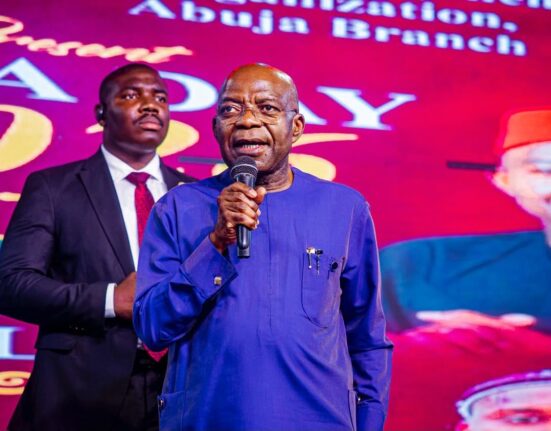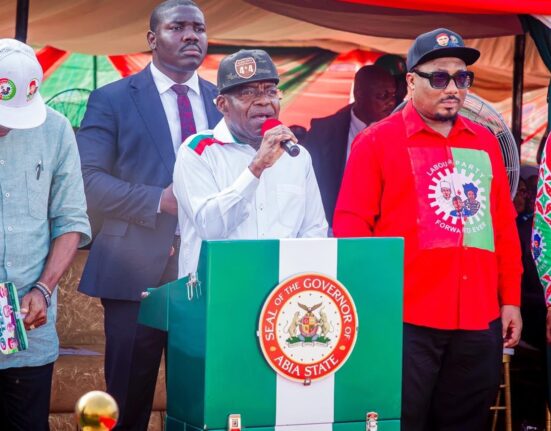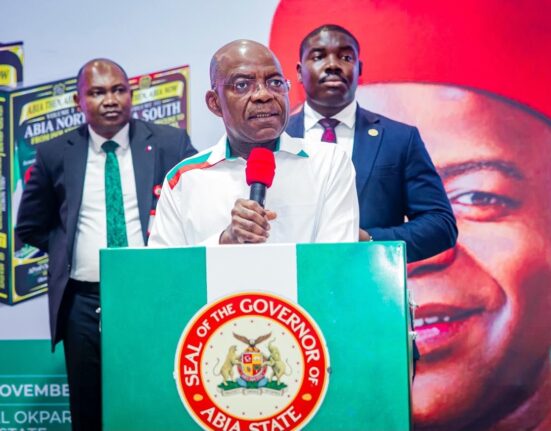

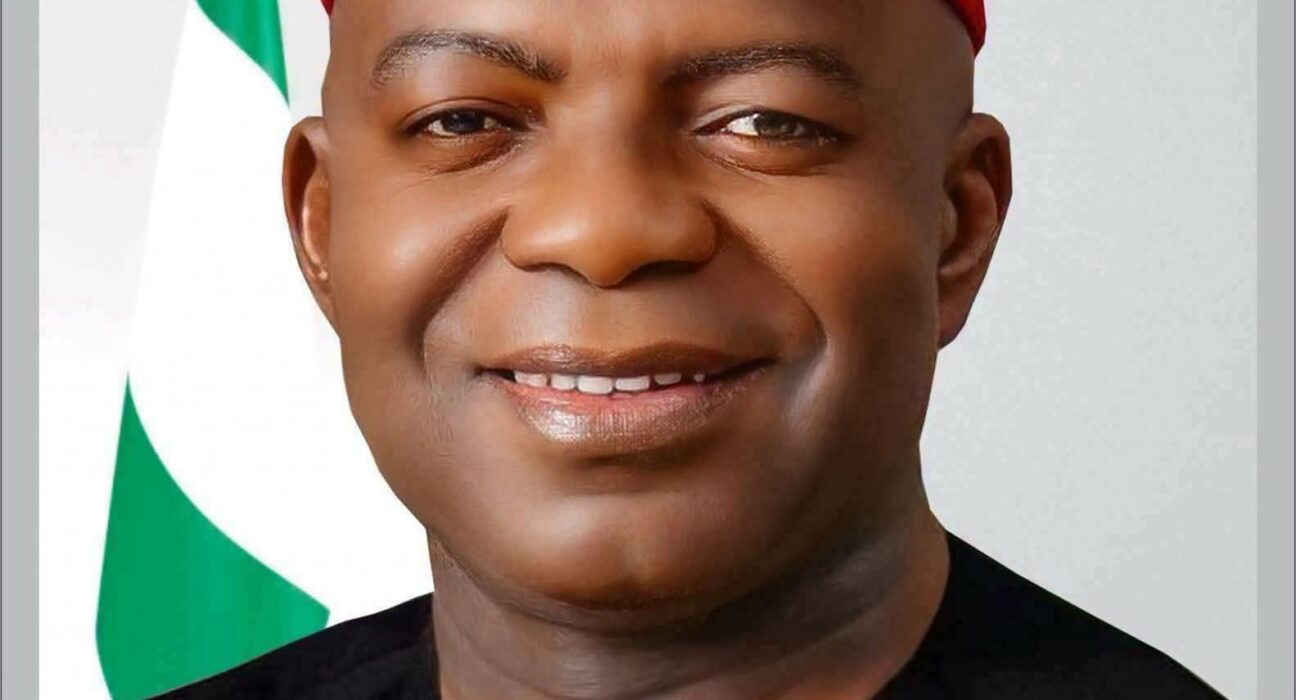
Being the Text of an Address Presented by Governor Alex C. Otti, OFR, at the Opening Ceremony of the US – Africa Trade and Investment Conference and Expo at the International Conference Centre, Umuahia, on Tuesday, November 17, 2026
Protocol
- Africa’s development puzzle, especially the paradox of poverty amidst the abundance of prized natural resources, has dominated a series of global economic conferences and conversations in the last 5 decades. Economists, politicians, diplomats, superstars and persons of different social and moral persuasions have made efforts to keep Africa’s crises of material wretchedness on the front burner. The rest of the world, to its credit, has responded to these campaigns with aid and targeted interventions. The support for Africa’s poor, for several decades, was dominated by the disbursement of handouts and similar initiatives that are designed to address the notable symptoms of poverty, even as the real issues, particularly low productivity and restricted access to global markets, festered beneath. The let’s throw something to Africa policy thrust has seen governments and institutions in the United States of America and across Western Europe commit an estimated $2 trillion in overseas development assistance around the continent since the 1970s. The challenge, however, is that the generous outlay in aid has failed to address the fundamental development landmines within the region; this is buttressed by the fact that the continent accounts for more than 70% of the global incidence of extreme poverty. If the continent’s poverty crisis still persists, after over 5 decades of aid and trillions of dollars in humanitarian interventions, the next course of action would be to acknowledge that Africa needs a new development paradigm to defeat poverty.
- The search for a new roadmap to growth and prosperity has rightly evolved beyond aid to the pursuit of trade, investment, and economic integration. The more sustainable approach to stimulating growth and prosperity is embodied in the African Growth and Opportunities Act (AGOA), enacted by the US Congress in 2000, and the African Continental Free Trade Area (AfCFTA), brokered by the African Union (AU) in 2018 and adopted by 54 AU member states. Even with differences in origin, structure, and target markets, objective commentators are optimistic that AGOA and AfCFTA are more suited for driving continent-wide growth in the decades to follow. To be clear, it would be unfair to downplay the importance of aid, especially in periods of natural emergencies and social upheavals; however, on the evidence of the last 50 years of aid packages for Africa, one can say with some measure of certainty that the continent needs more than once-in-a-while charity offerings to overcome the indignity of widespread poverty.
- The US – Africa Trade and Investment Conference and Expo, otherwise known as AFRICANDO, draws strongly from the optimism that has defined the emerging development paradigm for Africa, one that is founded on the foundation of individual and collective responsibility. The consciousness that genuine development cannot be achieved on a platter of charity has stirred a certain sense of urgency amongst stakeholders. Expectedly, the focus has shifted from a dependence orientation to an interdependence framework. Although cynics may attempt to dismiss the newfound sense of belief among the local community of entrepreneurs and investors, the fact is that we actually should have taken this path 50 years ago, when the economic agenda of post-independence Africa was being set. At any rate, it is heartwarming to observe that all of us have come to acknowledge that the key to our economic redemption is firmly in our hands, even as we look to the developed economies for market access and institutional support.
- It is on this note that I would like to thank the Foundation for Democracy in Africa (FDA) and the Abia Global Chamber of Commerce for bringing the first AFRICANDO event to be hosted on the continent to Abia, God’s Own State. The State does not take the honour of hosting this event lightly because we appreciate what it means for our people, especially the community of artisans, small business owners, industrialists, network of investors, and multilateral partners. We are happy to be joined at this event by senior members of the diplomatic community, our brothers and sisters in the diaspora, policymakers, leaders of frontier development institutions and prospective investors looking to identify new frontlines of value.
- Over the last 3 years, we have, through deliberate and strategic investments in public infrastructure, security and social services, repositioned the State, particularly Aba, the commercial nerve centre of the region, into a favourite investment destination. We had given a certain priority to the restoration and expansion of Aba’s infrastructure for 2 connected reasons: the first is based on the awareness of the city’s unique historical eminence as a prime industrial and commercial centre; the second relates to the post-COVID-19 pandemic efforts to diversify the world’s production centres. The overarching agenda is to insulate nations from the perils of extensive dependence on a single region for global manufacturing needs in seasons of emergencies. The administration may have kicked off its infrastructure development programme in Aba, but our ambition stretches farther; we appreciate that Aba has what it takes to drive the economic rejuvenation of the entire region through the manufacture of varieties of goods for the local and export markets, processing of agro-commodities and a base for the ICT ecosystem.
- Our approach to the development of Aba was holistic, starting with the setting up of the greater Aba Development Authority (GADA) to coordinate and mainstream investments in the city’s infrastructure and social services landscape; we then went further to identify where direct public sector investments can spur long-term social and economic gains. Through prudent application of resources and the technical ingenuity of our teams, the administration has fixed hundreds of kilometres of roads in the city, including Port Harcourt Road, Ohanku and Obohia Roads, which were impassable for several decades. A few weeks ago, we flagged off the reconstruction of Uratta and Old Express Roads, abandoned for close to 30 years, in a final push to complete the total restoration of the greater Aba road infrastructure outline. Beyond infrastructure, the administration has equally transformed the city into one of the cleanest urban centres in the country, improved the security of lives and property within and around the metropolis, and, most importantly, completed the framework for the city’s urban and economic development blueprint for the next 25 years through the delivery of the Greater Aba Masterplan.
- To boost the appeal of Made-in-Aba products in the international market, the State, in collaboration with the United Nations Development Programme (UNDP, set up the Aba Export Growth Lab. So far, scores of business owners and artisans within the leather and footwear, garments and textiles, and agro-processing ecosystems have undergone extensive training on business formalisation, product standardisation, packaging and branding, digital marketing, and other aspects of competitiveness from the lab. The whole aim of our investments in the Aba business corridor is to support the city’s community of entrepreneurs to benefit from the network of opportunities that have opened with the extension of the AGOA window, and the integration of AfCFTA into the economic growth pathway of the continent.
- Beyond the transformation in the Aba infrastructure landscape, the general business corridor in the State is improving tremendously as we continue to strengthen our bureaucratic institutions for effective service delivery. Our “Certificate of Occupancy in 30-days policy” has seen us sign more certificates of occupancy in the last 3 years than was done in the decade before now. Recruitment and promotion in the civil service are now driven by technology applications that eliminate human bias and similar considerations that are not related to competence evaluation. We have also gone a step further to streamline the local tax system, cutting out channels of extortion and double taxation. It may also interest us to note that in many instances, the fee for several government services in the State has remained at the pre-2023 level because for us, prosperity must precede taxation.
- The development footprints of the administration are as bold in Umuahia, our dear capital, and other parts of the State, as they are in Aba; from road infrastructure to power, social services, environmental restoration and climate control initiatives, we are cutting down the barriers that had hitherto hamstrung the productive energy of our population. The 67.6km Umuahia–Uzuakoli–Abiriba–Ohafia Road which criss-crossed several communities across 4 local government areas, has opened up the State’s agricultural belt, supporting farmers to move their produce to the urban markets; just like the 30-kilometre Ozu Abam – Arochukwu Road, 11.5-kilometre Nunya- Eluama- Ogboro Road, 11.3-kilometre Mbala-Umuaku – Ngodo Road and several other strategic roads constructed across the northern district of the State. In the central region, the completion of the 5.9-kilometre Uma Ukpai Road from Onuimo to Abia Tower has expanded the business corridor in Umuahia, just as the reconstruction and expansion of the Aguiyi-Ironsi Boulevard improved the cosmopolitan outlook of the city. We have also completed dozens of internal roads in the capital as well as several others in Ikwuano, Isialangwa North and South, and Osisioma LGAs. In the southern part of the State, outside the cosmopolitan centres of Aba North and South, and parts of Obingwa and Ugwunagbo LGAs, we are also doing so much in several communities to close the gap between the urban and rural centres. This is exemplified by the recently commissioned 12.6km Ohanze-Ntighauzo-Obete-Umuoha-Oberete-Akirikaobu Road, which connects Obingwa and Ukwa East LGAs. In Ukwa West, the setting up of the Abia Industrial and Innovation Park (AIIP) is intended to open up the entire district for accelerated development through private sector investments supported by strong public sector leadership. Leveraging the significant reserves of crude oil and natural gas deposits in the region, the State Government, with support from agencies and institutions of the Federal Government, notably the Nigerian Content Development and Monitoring Board, has set up a special development vehicle for drawing global corporations to invest in specialized manufacturing, agricultural processing, residential property, and other ventures within the economic and commercial clusters of AIIP, spread across 2, 000 hectares of land.
- The central point of my message is that there is so much going on in Abia, across the local government areas, and in all the sectors of our economic and social expressions. All the investment opportunities in the State are promising and have been consciously set up to create long-term value for interested investors seeking to partner with our community of resilient entrepreneurs. Thankfully, we made efforts to bring many stakeholder groups to this event. Every local government area in the State, strategic government ministries and departments, and several business interests, including manufacturers and agro and allied entrepreneurs, have established their presence at this EXPO and will remain with us for the duration of the programme. I invite all of us to take time to network and see what partnership deals can be initiated and completed right here, or shortly after. We are specifically targeting investments in manufacturing, real estate, hospitality, agricultural value chains, ICT, and others. This is for reason of the fact that the atmosphere in Abia is very conducive and supportive of those ventures.
- It may interest us to note that we now have a stable power supply in Aba, subject to the consistency of gas supply to the plants; the labour rates in the city are more affordable than in other comparable cities, and the skill sets of the workforce are decent. Aba is also not far from the Rivers Port. Ultimately, doing business in Abia, to be more specific, in Aba, means lower average overhead costs, affordable labour, and access to global markets. I have since directed members of our team to arrange trips to different parts of the State for our guests and dedicate someone to guide them through the destinations of interest.
- This event is about deepening the ties between the continent of Africa and the United States of America, and I am glad it is happening in Abia, where the economic philosophy of the people is driven by enterprise, resilience, and the power of innovation. In the last 50 years, our relationship with the US and other parts of the Western world was built around aid; however, as many objective commentators have admitted, the outcome has been less than impressive. It is fulfilling that a new consensus has now been reached that we must look beyond aid and move into the transformative power of trade, partnership and the opportunities that emerge when the technological and industrial leadership of the West is matched with the abundant natural and human resources in Africa. Our relationship in the post-aid age, anchored by economic cooperation and fair access to markets and resources, will open us to a new era of prosperity, and an end to poverty, destitution and exploitation.
- On a final note, I would like to re-echo my appreciation to the Foundation for Democracy in Africa (FDA), especially the President and co-founder, Fred Oladeinde, and his entire team, and the Abia Global Chamber of Commerce led by Engr. James Ogbuka Umekwe, for pulling all the stops to make this event a possibility on our soil. I would also like to appreciate the local coordination committee led by Pastor Caleb Ajagba, PhD, the Chief of Staff to the Governor, and members of the local chambers of commerce and independent vendors for their active support, participation, and unwavering enthusiasm in the economic prospects of Abia. Thank you for the brilliance of your efforts, and for your faith in the future.
- As I formally declare this conference open, let me thank you for listening, and may God bless you.